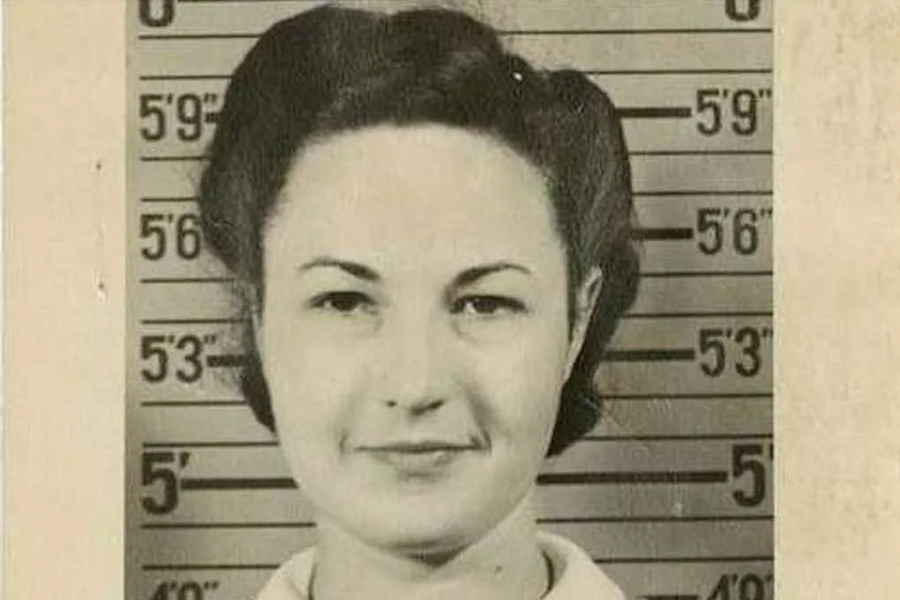
| Basic detail | Information |
|---|---|
| Full name | Beatrice Arthur |
| Known as | Bea Arthur Marine |
| Birth name | Bernice Frankel |
| Born | May 13, 1922 |
| Birthplace | New York City, New York, United States |
| Parents | Rebecca Frankel, Philip Frankel |
| Siblings | Gertrude Frankel, Marian Frankel |
| Spouses | Robert Alan Aurthur, Gene Saks |
| Children | Matthew Saks, Daniel Saks |
| Military service | United States Marine Corps Women’s Reserve |
| Best known for | Maude, The Golden Girls |
| Died | April 25, 2009 |
A life that began with sharp edges and steady fire
I imagine Bea Arthur Marine burned brightly in a drafty room. One of her strengths was that she never tried to fit in. One of the most famous 20th-century performers was Bernice Frankel, born Beatrice Arthur. Her strong, clear voice and weighty presence were unassuming. It takes.
She was born in New York City on May 13, 1922, and grew up in a Jewish household, a family business, and Cambridge, Maryland. Her family history formed her hard shell around a sensitive core. I see her existence as a long compromise between tenderness and hardness. She became known for her balance on cinema and stage.
Family roots that shaped her early world
Bea Arthur Marine came from a family that had both motion and endurance. Her father, Philip Frankel, was born in Poland, and her mother, Rebecca Frankel, was born in Austria. They built a life in the United States and raised their daughters in a household that mixed immigrant discipline with practical survival. Her parents ran a clothing business after the family settled in Maryland, which gave the home a working rhythm. It was not glamorous. It was real.
Her sisters, Gertrude Frankel and Marian Frankel, formed the other part of that early constellation. Marian is often identified as Marian Kay Frankel, which gives her a slightly fuller shape in the record, while Gertrude remains more private. I find that interesting. In public memory, one sibling can become a silhouette while another stays almost entirely out of view. Even so, both sisters were part of the domestic landscape that surrounded Bea before fame widened the horizon.
The family did not stay fixed in one place. That kind of movement often leaves marks, and it seems to have done so here. Bea Arthur Marine grew up with the pressure of adjustment, the need to observe quickly, and the instinct to stand a little apart. Those qualities later became assets. She knew how to read a room. She knew how to hold silence like a blade.
Marriage, children, and the private corners of her life
Her personal life had two major marriages, each marking a different chapter. Her first husband was Robert Alan Aurthur, a fellow Marine whom she married in 1944 during World War II. Their marriage ended in divorce three years later, but the surname remained, reshaped into the professional name Arthur. That small spelling shift became one of the most famous names in entertainment. History is full of these quiet pivots, where a private event becomes the seed of a public identity.
Her second husband was Gene Saks, a Broadway actor and director. They married in 1950 and stayed together until 1978. Their marriage lasted longer and seems to have held the center of her family life for many years. Together they adopted two sons, Matthew Saks and Daniel Saks. I think this part of her life is especially important because it shows a softer architecture beneath the joke timing and iron posture. She was not only a performer. She was also a mother, a partner, and a keeper of a household.
Matthew Saks, her elder son, is known as an actor. Daniel Saks is known for work in set design and production-related fields. The two sons carry different creative forms, which feels fitting for a family shaped by performance, design, and the backstage machinery of the arts. Their lives extend her story beyond the spotlight and into the practical bones of theater and television.
From Marine Corps service to the stage
Bea Arthur Marine’s military service gives her biography a rugged, surprising turn. She joined the United States Marine Corps Women’s Reserve in 1943 and served as a typist, truck driver, and dispatcher. She rose to the rank of staff sergeant. That detail changes the way I read everything that came later. She was not only playing strength. She had lived inside it.
The war years gave her discipline, posture, and a sense of timing that likely served her later on stage. Military service and comedy might seem like distant planets, but in her case they both demanded precision. One wrong move in either world can ruin the rhythm. She understood that.
After the military, she moved toward theater training and began building a career in New York. Her early stage work laid the foundation for a later rise that would include Broadway, television, and memorable character roles. She did not become famous by accident. She accumulated force.
Career highlights that turned her into an icon
Her career revolves around Broadway, Maude, and The Golden Girls. She won a Tony for her Broadway role in Mame. The role of Yente in Fiddler on the Roof suited her incisive wit and rhythmic brilliance.
She became famous as Maude Findlay on TV. That role was surprising. She could be loud, political, hilarious, impatient, and humane. As Dorothy Zbornak in The Golden Girls, she peaked again. Dorothy was sharp, dry, heated under the sarcasm, and unmistakable. The character was opinionated and lighthouse-like.
Her decades-long career includes stage, television, one-woman shows, and guest roles. She received Emmys, Tonys, Golden Globes, and a TV Hall of Fame induction. Her accomplishments were not trophies. The sparkling stones led through American entertainment.
Net worth, legacy, and the shape of her public value
Her net worth has often been estimated at about 25 million dollars at the time of her death. Numbers like that can feel cold, but they are also a measure of how much value her work generated over time. She was not just famous. She was bankable, beloved, and durable. Her legacy continued through reruns, tributes, anniversary coverage, and the way new audiences kept discovering her timing and voice.
She also left behind a larger kind of wealth, one that does not sit neatly in a bank statement. She helped redefine what an older woman could be on television. She was not decorative. She was not meek. She was a force field with punch lines. That matters.
FAQ
Who was Bea Arthur Marine?
Bea Arthur Marine refers to Beatrice Arthur, the performer and Marine Corps veteran better known as Bea Arthur. She became famous for her stage work, her television roles, and her unmistakable voice and presence.
Who were her family members?
Her parents were Rebecca Frankel and Philip Frankel. Her siblings were Gertrude Frankel and Marian Frankel. Her spouses were Robert Alan Aurthur and Gene Saks. Her children were Matthew Saks and Daniel Saks.
What made her career important?
Her career mattered because she moved across stage and television with rare control. She won major awards, created iconic characters, and helped change how women were written and seen in sitcoms.
Did she serve in the military?
Yes. She served in the United States Marine Corps Women’s Reserve during World War II and reached the rank of staff sergeant.
Why is she still remembered?
She is remembered for her roles in Maude and The Golden Girls, for her fierce comic timing, and for the way she turned toughness into an art form.