Who Is Christopher Welles Feder
Christopher Welles Feder, born Christopher Marlowe Welles on March 27, 1938, in New York City, is an American writer, educational author, and former child actress. She is best known as the eldest daughter of legendary filmmaker Orson Welles and for her memoir, In My Father’s Shadow: A Daughter Remembers Orson Welles, published in 2009.
Her life sits at the intersection of Hollywood history, complicated family relationships, and a quieter career in education and writing. While her father became internationally famous for transforming cinema, Christopher, widely known as Chris Welles Feder, built a professional identity far removed from the glare of celebrity.
I find her story particularly compelling because it offers a different way to understand a famous family. Instead of presenting Orson Welles only as a cinematic genius, her experiences reveal the father behind the public image, a man capable of great affection and humor who could also be absent and unreliable in everyday family life.
Chris received the unusual first name Christopher because her father liked the sound of Christopher Welles. When she was born, he reportedly announced her arrival through telegrams bearing the words “CHRISTOPHER SHE IS HERE.” The name reflected his distinctive personality, but it also became a lifelong part of her identity.
Despite her connection to one of the most celebrated filmmakers of the twentieth century, Chris did not pursue a conventional Hollywood career. She chose education, publishing, and writing, eventually becoming associated with the popular children’s learning series Brain Quest.
Orson Welles and His Eldest Daughter
Orson Welles, born George Orson Welles on May 6, 1915, was an American actor, director, screenwriter, and producer. His groundbreaking film Citizen Kane, released in 1941, helped establish his reputation as one of cinema’s most influential creative figures. Other important works included The Magnificent Ambersons and Macbeth.
For Chris, however, Orson was not simply a name in film history. He was her father, a fascinating and sometimes difficult presence whose brilliance did not always translate into dependable parenting.
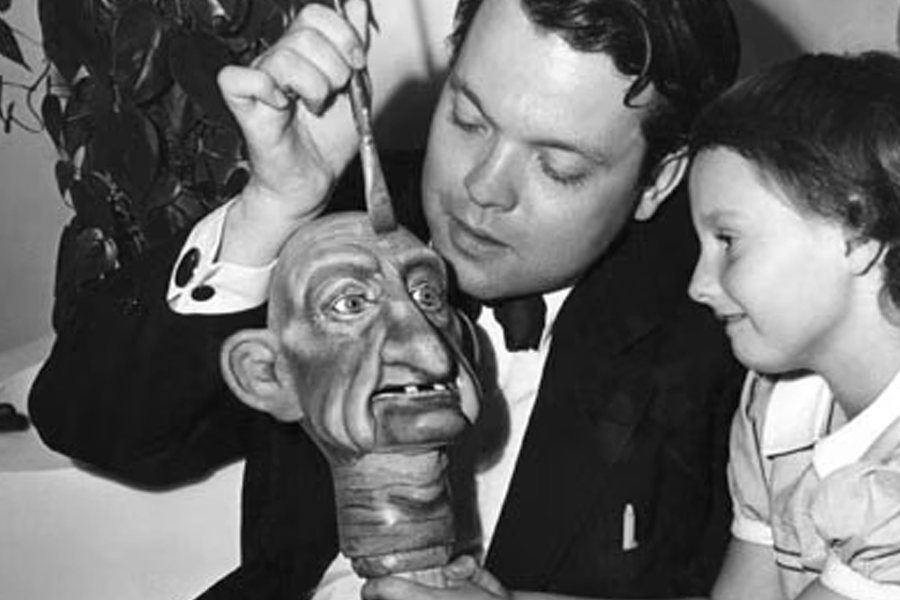
Their relationship was marked by periods of closeness separated by long absences. When he was present, he could be affectionate, playful, and intellectually stimulating. He introduced her to art, encouraged her curiosity, and exposed her to people and places that most children could scarcely imagine.
Yet his demanding professional life and complicated personal relationships often kept him away. Chris experienced the contrast between the extraordinary man admired by audiences and the inconsistent parent she knew privately.
This duality became central to her memoir. Rather than reducing her father to either a hero or a disappointment, she portrayed a more complicated individual. His warmth mattered, but so did his absences. His genius was undeniable, yet it could overshadow the needs of those closest to him.
I see this tension as one of the most revealing aspects of Chris’s story. The children of famous people often inherit a public narrative before they have the opportunity to form their own. Chris eventually used her writing to reclaim that personal perspective.
Her Mother Virginia Nicolson and a Difficult Childhood
Chris’s mother, Virginia Nicolson (Nicholson), was born in 1916. She was an actress before her early engagement with Orson and came from a traditional, socially renowned Chicago family.
Virginia and Orson married as youths in 1934. Their connection began during creative experimentation and youth ambition. The short film The Hearts of Age was one of their early collaborations.
Orson’s infidelity and troubled relationship led to their 1940 divorce. When her parents divorced, Chris was two.
Virginia married screenwriter Charles Lederer and South African John C. Pringle. Chris lived in South Africa and Europe during these marriages and family changes.
Thus, migration, family ties, and expectations influenced her childhood. Her mother offered structure and discipline, but Chris recalls a strained relationship.
She had a memorable South African adventure. Chris was troubled by her mother’s embrace of apartheid, illustrating how travel and family exposed her to social and political realities that challenged her perspective.
Virginia died 1996 in Wiltshire, England. Her bond with Chris went beyond maternal care and conflict. Chris addressed its significance in family history with extraordinary openness.
Chris Welles Feder’s Half Sisters and the Welles Family Connections
Orson Welles had three daughters, each raised in a different family environment. Although they shared the same father, the sisters did not grow up as a closely connected household.
Rebecca Welles
Rebecca Welles was born in 1944 to Orson Welles and his second wife, actress Rita Hayworth. Chris was present around Rebecca’s birth, and the sisters maintained some contact during their younger years.
Their relationship became more distant as they grew older. Different households, geographical separation, and their father’s complicated personal life made it difficult for them to develop a lasting sisterly bond.
Rebecca’s mother, Rita Hayworth, was one of Hollywood’s major stars, known for films such as Gilda. Chris remembered Rita warmly and described her as a fun and welcoming presence during visits and weekends.
Rebecca died in 2004, four years before what would have been her father’s ninetieth birthday and five years before Chris published her memoir.
Beatrice Welles
Beatrice Welles, born in 1955, was the daughter of Orson and his third wife, Paola Mori, an Italian actress. Chris first met Beatrice when she was approximately three years old and encountered her again at their father’s funeral in 1985.
Their contact remained limited. The sisters belonged to different generations of their father’s family life and grew up under different circumstances.
The story of the Welles sisters illustrates how a family can share a powerful surname without sharing a common upbringing. Fame created a connection between them, but it did not automatically produce intimacy.
Michael Lindsay Hogg and the Question of a Possible Half Brother
Michael Lindsay Hogg, born in 1940, is a British American film and theater director known for his work with the Beatles, including the film Let It Be, as well as television and theater productions.
Chris has long suspected that Lindsay Hogg might be her half brother because of Orson’s relationship with Lindsay Hogg’s mother, actress Geraldine Fitzgerald, around the time of Chris’s early childhood.
The two were childhood playmates in Santa Monica. Over the years, accounts from people familiar with the family, including Gloria Vanderbilt, contributed to speculation about their possible biological connection.
However, the question remains unresolved. Lindsay Hogg has discussed the longstanding rumors, and a DNA test was inconclusive. Some biographical interpretations have also questioned whether the available chronology supports the theory.
It is important to distinguish family suspicion from established fact. Their childhood connection and the surrounding accounts are part of the story, but their biological relationship has not been conclusively demonstrated.
The Surrogate Family That Gave Chris Stability
Not every important figure in Chris’s childhood belonged to the immediate Welles family. Roger Hill, affectionately known as Skipper, and his wife Hortense, known as Granny, provided a different kind of family environment.
The Hills ran the Todd School in Illinois, where Orson Welles had once studied. Chris lived with them for nearly two years while her mother was between marriages and attended the school.
Their role extended beyond education. They became surrogate parents and grandparents, offering a degree of continuity during a childhood marked by changes in household, country, and parental availability.
Their influence also offers a revealing connection between Orson’s past and Chris’s upbringing. The school that had helped shape her father’s early development became part of her own childhood story.
Chris later defended and highlighted people who, in her view, had been overlooked or inadequately represented in accounts of Orson’s life. The Hills were among those whose importance deserved recognition.
After Orson’s death in 1985, Chris also developed a positive relationship with Oja Kodar, his longtime companion during approximately the final 24 years of his life. Their relationship provided another connection to her father’s private world after he was gone.
Chris Welles Feder’s Marriages and Children
Chris married Norman deHaan in December 1957. The marriage ended in divorce.
She married college professor, editor, and artist Irwin Feder in 1970. Their marriage was joyful and stable. They prioritized family, intellectual pursuits, and professional independence over Hollywood fame.
Chris relied on Irwin for adulthood continuity. After a childhood of separation and transition, her second marriage provided stability.
Katia Feder Dubus and Ivan Feder were their children.
Katia married Bertrand Dubus, Ivan Joanna Feder. Grandchildren Alex Dubus and Aria Feder are also present.
The younger generation is more private than renowned relatives whose stories are public. Their lifestyles represent a familial identity beyond Orson Welles’s successes and scandals.
In 2011, Irwin Feder died. His death ended Chris’s 40-year marriage.
Chris’s father’s name opened a door to an astonishing world, but her family had different priorities. Marriage, children, and employment defined her adulthood.
From Child Actress to Educational Writer
Chris’s professional journey began with a brief appearance in her father’s film Macbeth, released in 1948. She played one of Macduff’s children, a boy, in the adaptation of Shakespeare’s tragedy.
The role connected her to cinema history at a young age, but acting did not become her principal career. Instead, she moved toward publishing, education, and writing.
During the mid-1960s, she worked as a foreign-language editor at Encyclopaedia Britannica, with professional experience associated with Chicago, Vienna, and New York. She subsequently worked as managing editor at Ludi Education Inc. during the late 1960s and early 1970s.
From the 1970s onward, she established herself as a freelance writer, textbook author, and educational consultant.
Her work focused on elementary reading, language arts, social studies, and adult literacy. These subjects may seem distant from the dramatic world of Orson Welles, but they reveal a different form of creativity: the ability to make information accessible, memorable, and engaging.
Her Contribution to Brain Quest
Chris became particularly associated with Brain Quest, the educational quiz-card series designed to help children learn through questions, answers, and interactive practice.
The series covers multiple grade levels, from preschool through middle school, and has appeared in numerous editions since the early 1990s.
Its format transforms learning into a compact challenge. Children can practice vocabulary, mathematics, reading comprehension, and general knowledge while receiving immediate feedback.
Chris’s work on Brain Quest reflects her interest in education as an active process. Rather than treating learning as a list of facts to memorize, the series encourages children to retrieve information, make connections, and test their understanding.
Her other educational credits include Developing Everyday Reading Skills, the Century 21 Reading Program, New York City Story, and Then and Now. She also contributed to children’s anthologies.
Her career is a reminder that a person’s achievements do not need to resemble those of a famous parent to be meaningful. Orson Welles changed cinema through bold artistic experimentation. Chris contributed to education by helping generations of children develop their skills and knowledge.
Her Memoir and the Decision to Tell Her Story
In 2009, Chris published In My Father’s Shadow: A Daughter Remembers Orson Welles. The book brought her personal experiences into public discussion decades after her father’s death.
She had remained relatively private for much of her life, despite the constant interest surrounding Orson Welles. Her decision to write the memoir followed renewed engagement with her father’s work, including a retrospective at Locarno in 2005.
The memoir offers a daughter’s perspective on a man whose life has often been examined through the lens of film history. It describes childhood memories, family relationships, moments of affection, disappointments, and the difficulty of reconciling a public legend with a private parent.
Its central strength lies in its intimacy. Chris writes about the father she knew rather than attempting to provide a comprehensive scholarly account of his career.
She also challenges interpretations of people in Orson’s life that she believes miss their complexity. Her mother, Virginia, and the Hills receive attention as individuals whose experiences deserve consideration in their own right.
The book’s publication represented a shift in Chris’s public life. She had spent decades working independently, but the memoir allowed her to contribute something distinctive to the history of her family: firsthand recollections that could not be supplied by film credits or professional biographies alone.
Poetry, Documentaries, and Her Father’s Legacy
Chris writes more than memoirs and educational resources. Her literary book, The Movie Director: Dramatic Monologs and Poems, was privately released in 2002.
In documentaries on Orson Welles, she has played herself. Searching for Orson (2006) and Magician: The Astonishing Life and Work of Orson Welles (2014) are examples.
These appearances link her recollections to cinema history. They also show how family memories can enrich a story about artistic accomplishments, professional conflicts, and critical repute.
She gave letters, photos, clippings, and other items about her father to the University of Michigan’s special collections in 2012. These materials preserve Welles family history.
Her viewpoint differs from film historians. She knew Orson as a celebrated film director and a fascinating, humorous, unpredictable, and hard-to-reach father.
His legacy is enhanced by his unique perspective.
The Welles Family Timeline
The following timeline places Chris’s life within the wider history of the family.
| Year | Event |
|---|---|
| 1934 | Orson Welles and Virginia Nicolson marry. |
| 1938 | Christopher Marlowe Welles is born on March 27 in New York City. |
| 1940 | Her parents divorce. |
| 1941 | Citizen Kane establishes Orson Welles’s major place in film history. |
| 1944 | Rebecca Welles is born to Orson Welles and Rita Hayworth. |
| 1948 | Chris appears in her father’s film Macbeth. |
| 1955 | Beatrice Welles is born to Orson Welles and Paola Mori. |
| 1957 | Chris marries Norman deHaan. |
| 1970 | Chris marries Irwin Feder. |
| 1985 | Orson Welles dies on October 10. |
| 1996 | Virginia Nicolson dies. |
| 2002 | Chris publishes her poetry collection. |
| 2004 | Rebecca Welles dies. |
| 2005 | A Locarno retrospective helps renew Chris’s engagement with her father’s legacy. |
| 2009 | In My Father’s Shadow is published. |
| 2011 | Irwin Feder dies. |
| 2012 | Chris donates historical materials to the University of Michigan. |
| 2014 | She appears in Magician: The Astonishing Life and Work of Orson Welles. |
Frequently Asked Questions
Who is Christopher Welles Feder?
Christopher Welles Feder is an American writer, educational author, and former child actress. Born Christopher Marlowe Welles on March 27, 1938, she is the eldest daughter of filmmaker Orson Welles and is known for her memoir In My Father’s Shadow and her educational writing, including work associated with Brain Quest.
Why was she named Christopher?
Her father, Orson Welles, liked the sound of Christopher Welles and chose the traditionally masculine first name for his daughter. He reportedly announced her birth with telegrams reading “CHRISTOPHER SHE IS HERE.” She has continued to use Chris Welles Feder professionally and personally.
Who was Christopher Welles Feder’s mother?
Her mother was Virginia Nicolson, an actress who married Orson Welles in 1934. Their marriage ended in divorce in 1940. Virginia subsequently married Charles Lederer and John C. Pringle and spent portions of her later life in South Africa and Europe.
How many daughters did Orson Welles have?
Orson Welles had three daughters: Chris Welles Feder, Rebecca Welles, and Beatrice Welles. Chris was his daughter with Virginia Nicolson, Rebecca was his daughter with Rita Hayworth, and Beatrice was his daughter with Paola Mori.
Is Michael Lindsay Hogg Christopher Welles Feder’s half brother?
Their possible biological relationship has been discussed for decades, partly because of Orson Welles’s relationship with actress Geraldine Fitzgerald. Chris has suspected that Lindsay Hogg might be her half brother, but a DNA test was inconclusive. Their biological relationship therefore remains unconfirmed.
Who was Chris Welles Feder’s husband?
Chris married Irwin Feder in 1970. He was a college professor, editor, and artist. They remained married until his death in 2011 and had two children together, Katia Feder Dubus and Ivan Feder.
How many children does Chris Welles Feder have?
She has two children, Katia Feder Dubus and Ivan Feder. Her grandchildren include Alex Dubus and Aria Feder. Her immediate family has generally maintained a private life outside the public attention surrounding Orson Welles.
What is Chris Welles Feder known for professionally?
She is known for her work as an educational writer, editor, textbook author, and consultant. Her career included editorial work at Encyclopaedia Britannica and Ludi Education Inc., as well as contributions to educational programs and the Brain Quest quiz-card series.
What is her memoir about?
Her 2009 memoir, In My Father’s Shadow: A Daughter Remembers Orson Welles, recounts her experiences growing up as the daughter of a celebrated filmmaker. It explores his affection, absences, personality, and complicated family relationships through personal memories rather than a conventional account of his film career.
Did Chris Welles Feder become an actress like her father?
She appeared as a child in Orson Welles’s 1948 film Macbeth, playing one of Macduff’s children. However, she did not pursue acting as a long-term career. She instead developed a professional life centered on writing, publishing, and education.
Where has Chris Welles Feder lived?
Her childhood took her through several places, including New York, California, Illinois, South Africa, and parts of Europe. Her professional and family life later became centered largely in New York City. She has maintained a relatively private public profile in her later years.
What is Christopher Welles Feder’s net worth?
Her exact net worth has not been established through detailed public financial information. Her career as an educational author, editor, and writer provided an independent professional identity, but her earnings and personal assets are not publicly documented in sufficient detail to support a reliable estimate.